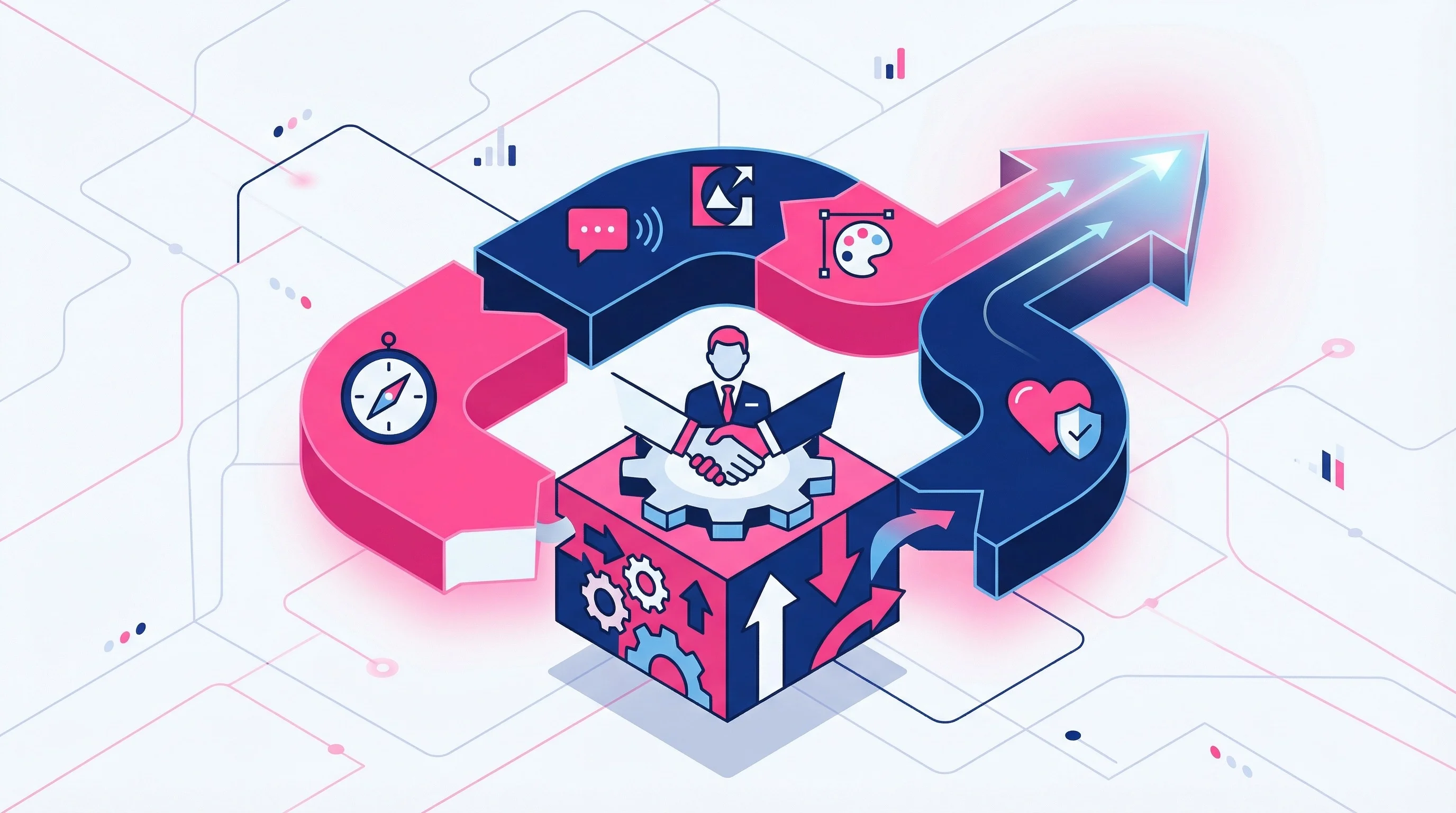
A brand consultant helps businesses define their strategic positioning, develop their brand identity, and ensure consistent application across all customer touchpoints. Unlike designers who create visuals, brand consultants work on the underlying strategy that determines what the visuals should represent.
Here’s a conversation that happens often:
“We’re hiring a brand consultant.” “What for?” “To design our new logo.”
That’s not what brand consultants do. That’s what designers do.
The confusion is understandable. Branding terminology is murky, and many people use “brand consultant” and “brand designer” interchangeably. They’re not the same.
Let me explain what brand consultants actually do—and whether you need one.
Brand Consultant vs Brand Designer vs Brand Agency
Brand Consultant (Strategist):
- Focuses on strategy and positioning
- Asks “who are you and what do you stand for?”
- Develops frameworks and messaging
- May not create any visual work
- Typically works early in the process
Brand Designer:
- Focuses on visual identity
- Creates logos, colours, typography, imagery
- Implements visual strategy
- May work from consultant’s strategy or develop their own
- Typically works after strategy is defined
Brand Agency:
- Combines strategy and design
- Full-service capability
- Integrated teams
- Higher cost, more comprehensive
- Good for businesses wanting one provider
Brand consultants are specialists in the strategic thinking. They may partner with designers or hand off to agencies for execution.
What Brand Consultants Actually Do
1. Discovery and Research
The foundation of all brand work. Consultants:
- Interview stakeholders (founders, leadership, employees)
- Conduct customer research (surveys, interviews)
- Analyse competitors and market positioning
- Audit current brand touchpoints
- Review business strategy and objectives
Deliverable: Discovery report synthesising findings and insights.
Why it matters: You can’t build effective branding without understanding the business, customers, and competitive landscape. Many design projects fail because they skip this step.
2. Positioning Development
Defining where your brand sits in the market:
- Target audience definition (specific, not generic)
- Competitive differentiation analysis
- Value proposition development
- Market positioning statement
- Brand promise articulation
Deliverable: Positioning framework and statement.
Why it matters: Positioning determines whether your brand is distinct or forgettable. It’s the strategic foundation for everything else.
3. Brand Architecture
For businesses with multiple products, services, or sub-brands:
- Branded house vs house of brands decision
- Sub-brand relationships
- Naming hierarchy
- Visual relationship between brands
- Portfolio strategy
Deliverable: Brand architecture framework and guidelines.
Why it matters: Without clear architecture, multi-brand businesses create customer confusion and dilute equity.
4. Messaging Development
How the brand communicates:
- Key messages by audience
- Tagline development
- Elevator pitch creation
- Value propositions
- Tone of voice guidelines
- Language do’s and don’ts
Deliverable: Messaging framework and guidelines.
Why it matters: Consistent messaging builds recognition and trust. Inconsistent messaging creates confusion.
5. Brand Personality and Values
The human characteristics of the brand:
- Brand personality traits
- Core values articulation
- Behaviours and attitudes
- Emotional associations
- Relationship with customers
Deliverable: Brand personality framework.
Why it matters: Personality differentiates brands with similar functional offerings. It creates emotional connection.
6. Experience Design
How the brand comes to life at touchpoints:
- Customer journey mapping
- Touchpoint audit and prioritisation
- Experience principles
- Service design elements
- Consistency standards
Deliverable: Experience guidelines and recommendations.
Why it matters: Brand is built through experiences, not just communications. Every interaction shapes perception.
7. Creative Direction
Bridging strategy and design:
- Visual direction recommendations
- Design brief development
- Designer/agency selection support
- Creative review and feedback
- Design alignment with strategy
Deliverable: Creative brief and ongoing direction.
Why it matters: Strategy without creative translation fails. Consultants ensure designers understand and execute the strategy.
8. Implementation Support
Bringing the brand to life:
- Rollout planning
- Training and workshops
- Internal communication
- Guidelines enforcement
- Quality control
Deliverable: Implementation plan and support.
Why it matters: Most rebrands fail in execution, not strategy. Implementation support ensures follow-through.
What Brand Consultants Don’t Do
They don’t typically:
- Design logos (unless they’re hybrid strategist-designers)
- Build websites
- Run marketing campaigns
- Write ongoing content
- Manage social media
- Create advertisements
These are execution activities. Consultants focus on strategy that guides execution.
When You Need a Brand Consultant
Good reasons to hire one:
You’re unclear on positioning. You can’t articulate what makes you different or who you serve best.
You’re entering new markets. Expansion requires strategic thinking about brand positioning.
You’re merging or restructuring. Complex brand architecture decisions need strategic expertise.
Your brand feels disconnected. Different parts of your business present differently.
You’re preparing for investment. Investors expect clear brand strategy.
You need objectivity. Internal teams are too close to see clearly.
Bad reasons to hire one:
You just want a new logo. Hire a designer.
You want someone to validate existing decisions. That’s not consulting.
You’re not ready to implement. Strategy without action is expensive notes.
You want magic without process. Good strategy requires research and collaboration.
How to Work With Brand Consultants
Before you start:
- Define your business objectives
- Identify key stakeholders
- Set realistic budget and timeline
- Commit to the process
During the engagement:
- Provide access to information and people
- Participate actively in workshops
- Give honest feedback
- Make decisions when asked
After strategy development:
- Implement consistently
- Train teams properly
- Use guidelines as standards
- Review and refresh periodically
What to Expect to Pay
UK market rates for brand consulting in 2026:
| Engagement Type | Duration | Cost Range |
|---|---|---|
| Positioning workshop | 1-2 days | £1,500-5,000 |
| Messaging development | 2-4 weeks | £3,000-10,000 |
| Full brand strategy | 6-12 weeks | £8,000-30,000 |
| Strategy + creative direction | 8-16 weeks | £15,000-50,000 |
| Ongoing retainer | Monthly | £2,000-8,000/month |
Independent consultants charge less than consultancies. London-based charge more than regional.
How to Choose a Brand Consultant
Look for:
- Relevant industry experience
- Clear process and methodology
- Strategic thinking (not just design appreciation)
- Good listening skills
- Willingness to challenge you
- References from similar businesses
Avoid:
- Those who skip research
- Those who impose solutions without discovery
- Those who can’t explain their process
- Those who promise guaranteed outcomes
- Those who work in isolation
Questions to ask:
- “What’s your process for developing brand strategy?”
- “Can you share case studies from similar businesses?”
- “How do you ensure strategy translates to execution?”
- “What do you need from us to succeed?”
- “How do you measure success?”
FAQs
Do I need a brand consultant or a designer?
If your challenge is “we don’t know what we stand for,” you need a consultant. If your challenge is “our logo looks dated,” you need a designer. Many businesses need both, in that order.
Can one person do strategy and design?
Some experienced professionals are genuinely good at both. They’re valuable because they integrate strategy and execution. But they’re rare. Most specialists are stronger in one area.
How long does brand consulting take?
A focused positioning workshop takes days. Comprehensive brand strategy takes 8-12 weeks. Add creative execution and implementation planning, and you’re looking at 4-6 months total.
What if we’ve already done strategy internally?
Good consultants will review it objectively. They may validate your thinking, identify gaps, or suggest refinements. Outside perspective has value even with existing work.
Is brand consulting worth it for small businesses?
For very small businesses, a focused workshop may be sufficient. As you grow, more comprehensive strategy becomes valuable. Match investment to business scale and ambition.
What to Do Next
- Clarify your challenge — is it strategic or executional?
- Define objectives — what business outcomes do you need?
- Set realistic budget — based on your scale and needs
- Talk to consultants — initial conversations are usually free
- Check references — speak to past clients
Want to explore whether brand consulting is right for your business? Start a conversation →
Related Articles: