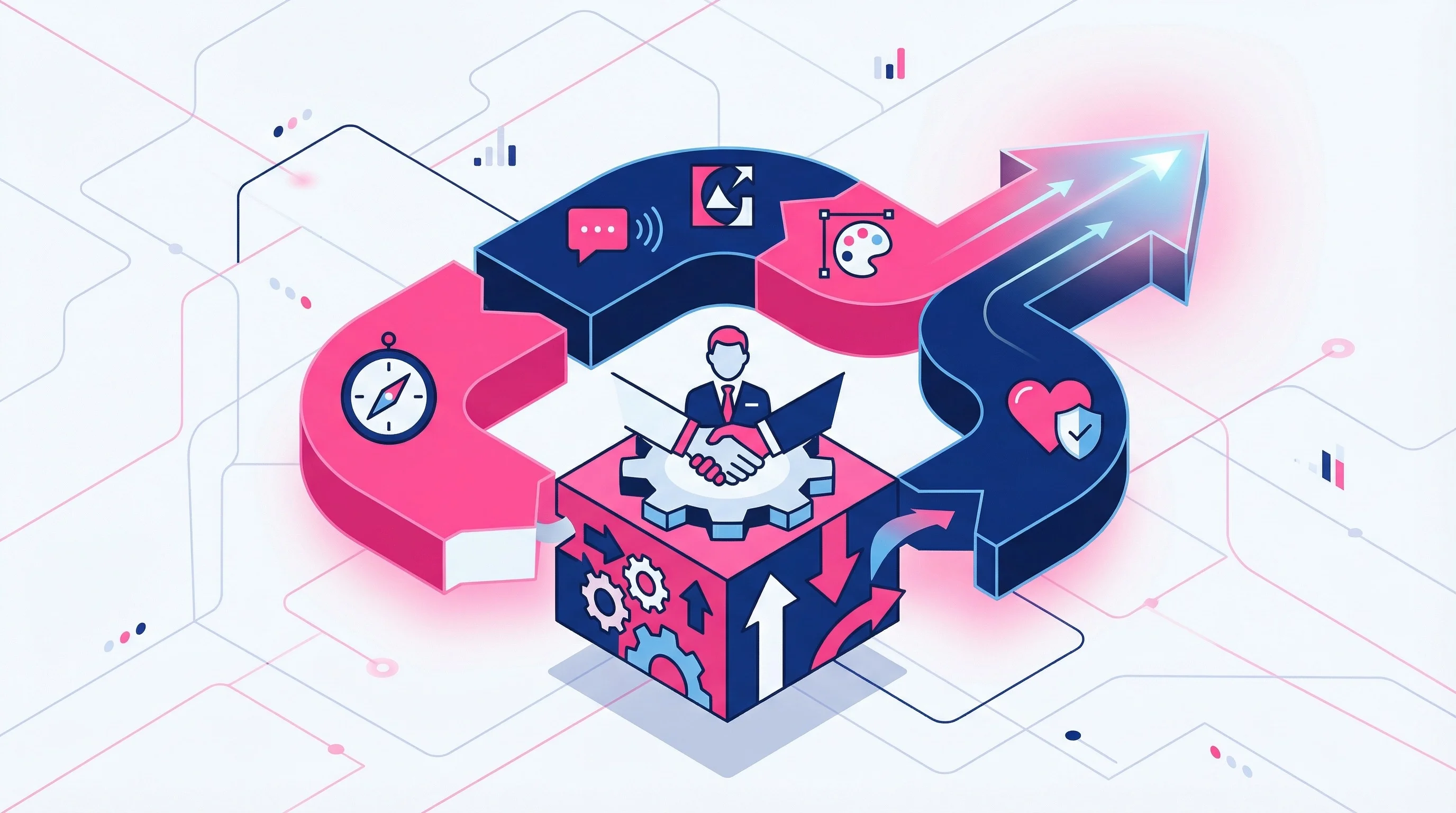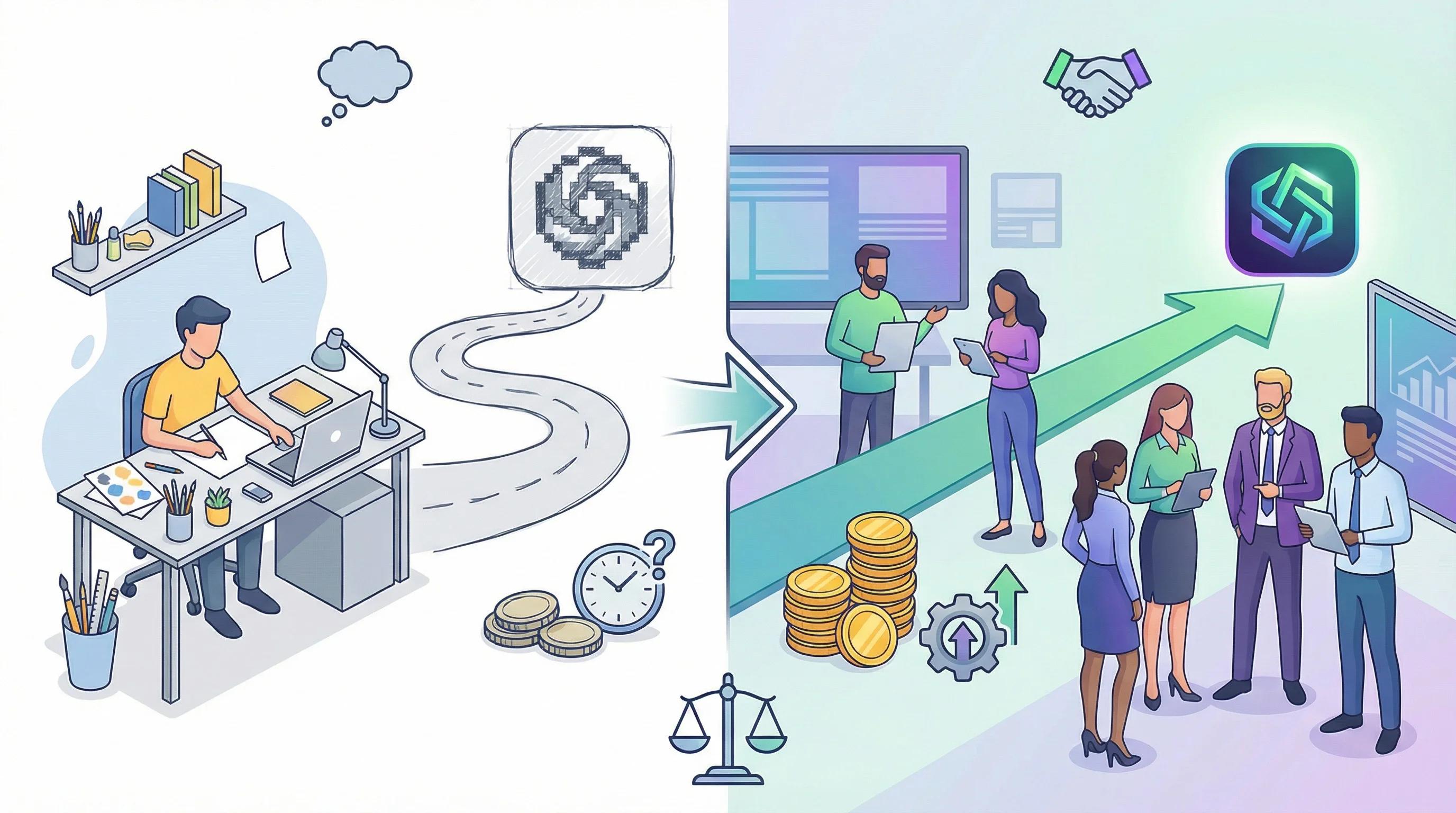
Your brand is the complete perception customers have of your business—every thought, feeling, and expectation they associate with you. Your logo is a visual symbol, about 5% of your overall brand identity. Confusing the two is one of the most common and costly mistakes businesses make.
Here’s a conversation I have at least once a month:
Business owner: “We need to rebrand.” Me: “What’s driving that?” Business owner: “Our logo looks dated.” Me: “What else needs to change?” Business owner: “Nothing really. Just the logo.” Me: “That’s not a rebrand. That’s a logo refresh.”
The confusion between brand and logo costs businesses thousands of pounds and months of distraction. Let me clear it up.
What Is a Logo?
A logo is a visual mark that identifies your business.
It’s a symbol. A wordmark. A combination of both.
Apple’s bitten apple. Nike’s swoosh. McDonald’s golden arches.
You recognise them instantly. They trigger associations. But those associations weren’t created by the logos themselves.
A logo is:
- A visual identifier
- A design element
- One component of your visual identity
- Something you can see
A logo does:
- Help people recognise your business
- Provide visual consistency
- Signal professionalism (when done well)
- Serve as a shorthand for your brand
A logo does NOT:
- Create trust
- Define your positioning
- Communicate your value proposition
- Build customer relationships
- Generate sales on its own
Think of it this way: your logo is your face. Important for recognition. But not why people want to know you.
What Is a Brand?
A brand is the complete perception of your business in someone’s mind.
It’s what they think when they hear your name. How they feel when they interact with you. What they expect from the experience. What they tell others.
A brand includes:
- Your positioning (what you stand for)
- Your messaging (how you communicate)
- Your visual identity (logo, colours, typography)
- Your customer experience (every interaction)
- Your reputation (what others say about you)
- Your culture (how your team behaves)
A brand is built through:
- Consistent messaging over time
- Reliable customer experiences
- Quality of product or service
- How you handle problems
- The people who represent you
- Every touchpoint a customer encounters
Nike’s brand isn’t the swoosh. It’s the association with athletic excellence, determination, and “just doing it.” Built over decades through sponsorships, advertising, product quality, and cultural relevance.
The swoosh triggers those associations. It didn’t create them.
The Brand Iceberg
Think of brand as an iceberg:
Above the water (visible):
- Logo
- Colours
- Typography
- Imagery
- Website design
- Marketing materials
Below the water (invisible but foundational):
- Positioning strategy
- Value proposition
- Brand personality
- Customer experience design
- Company values
- Employee behaviour
- Reputation
- Trust
Most businesses focus on the 10% above water. Then wonder why customers don’t connect with their “brand.”
The 90% below water determines whether the visible elements mean anything.
Why This Distinction Matters
Problem 1: Wasting money on the wrong things
“We need better brand awareness.” → Spends £20,000 on a new logo. → Nothing changes.
The logo wasn’t the problem. The positioning, messaging, and customer experience were the problems. A new symbol doesn’t fix those.
Problem 2: Skipping the strategic foundation
“Let’s start with logo concepts.” → Creates a beautiful logo with no strategic foundation. → Logo doesn’t represent anything meaningful. → Rebrands again in two years.
Design without strategy is decoration. Expensive decoration that doesn’t work.
Problem 3: Inconsistent customer experience
“Our brand is professional and customer-focused.” → Logo looks professional. → Customer service is slow and unhelpful. → Emails are full of errors. → Brand promise breaks at every interaction.
Your brand is what people experience, not what your logo promises.
Problem 4: Underinvesting in what matters
£10,000 on a logo. £0 on brand strategy. £0 on customer experience improvement. £0 on staff training.
The proportions are backwards.
What Businesses Should Actually Do
Step 1: Strategy First
Before any design work:
- Define your target customer
- Clarify your positioning
- Articulate your value proposition
- Establish your brand personality
- Map your customer experience
This work determines what your logo should represent.
Step 2: Visual Identity (Including Logo)
With strategy defined:
- Design a logo that embodies your positioning
- Select colours that reinforce personality
- Choose typography that supports tone
- Establish imagery direction
- Create a cohesive visual system
The logo is one part of this system, not the whole thing.
Step 3: Experience Design
How your brand comes to life:
- Website that delivers on promises
- Customer service that matches brand values
- Communications that sound like your brand
- Staff who embody your culture
- Consistency across every touchpoint
This is where brand equity is actually built.
Step 4: Ongoing Brand Management
Brand isn’t built and done:
- Monitor customer perceptions
- Maintain consistency
- Evolve thoughtfully over time
- Address experience gaps
- Train new staff on brand standards
When You Need a Logo Refresh vs Full Rebrand
Logo refresh is appropriate when:
- Your logo looks dated but your positioning is sound
- You need technical updates (scalability, digital use)
- Visual evolution, not revolution
- Business fundamentals haven’t changed
Full rebrand is appropriate when:
- Your business has fundamentally changed
- Your positioning no longer fits your market
- You’re merging with another company
- Your reputation needs resetting
- Your target audience has shifted
Don’t spend rebrand money on a logo problem. Don’t put a logo plaster on a brand problem.
Budget Implications
Logo design costs:
- DIY/Fiverr: £50-500
- Freelance designer: £500-5,000
- Design agency: £3,000-15,000
Full brand strategy costs:
- Brand strategy engagement: £3,000-25,000
- Complete visual identity (including logo): £5,000-50,000
- Experience design and implementation: £10,000-100,000+
If someone quotes you £500 for “branding,” they mean logo design. Understand what you’re buying.
FAQs
Can a great logo save a bad brand?
No. A logo triggers existing associations. If those associations are negative—or don’t exist—the logo can’t help. Fix the underlying brand before worrying about the logo.
Do I need a brand strategy before getting a logo?
Ideally, yes. Strategy gives the designer direction. Without strategy, you’re guessing at what the logo should communicate. This often leads to redesigns.
Can I start with a simple logo and develop brand strategy later?
You can, but you might outgrow the logo quickly. A simple, neutral logo (like a clean wordmark) is safer for this approach than something more conceptual.
How often should logos be updated?
Most logos should evolve subtly every 5-10 years to stay current. Major redesigns should only happen when business strategy significantly changes.
What makes a good logo?
Simple enough to work at small sizes. Distinctive enough to be recognised. Appropriate for your industry and positioning. Versatile across applications. Timeless rather than trendy.
What to Do Next
- Assess honestly — is your challenge a logo problem or a brand problem?
- Start with strategy — define positioning before designing anything
- Think system, not symbol — logo is one part of visual identity
- Invest in experience — brand is built through every interaction
- Be patient — brand equity builds over years, not weeks
Need help developing a complete brand strategy? Talk to us →
Related Articles: