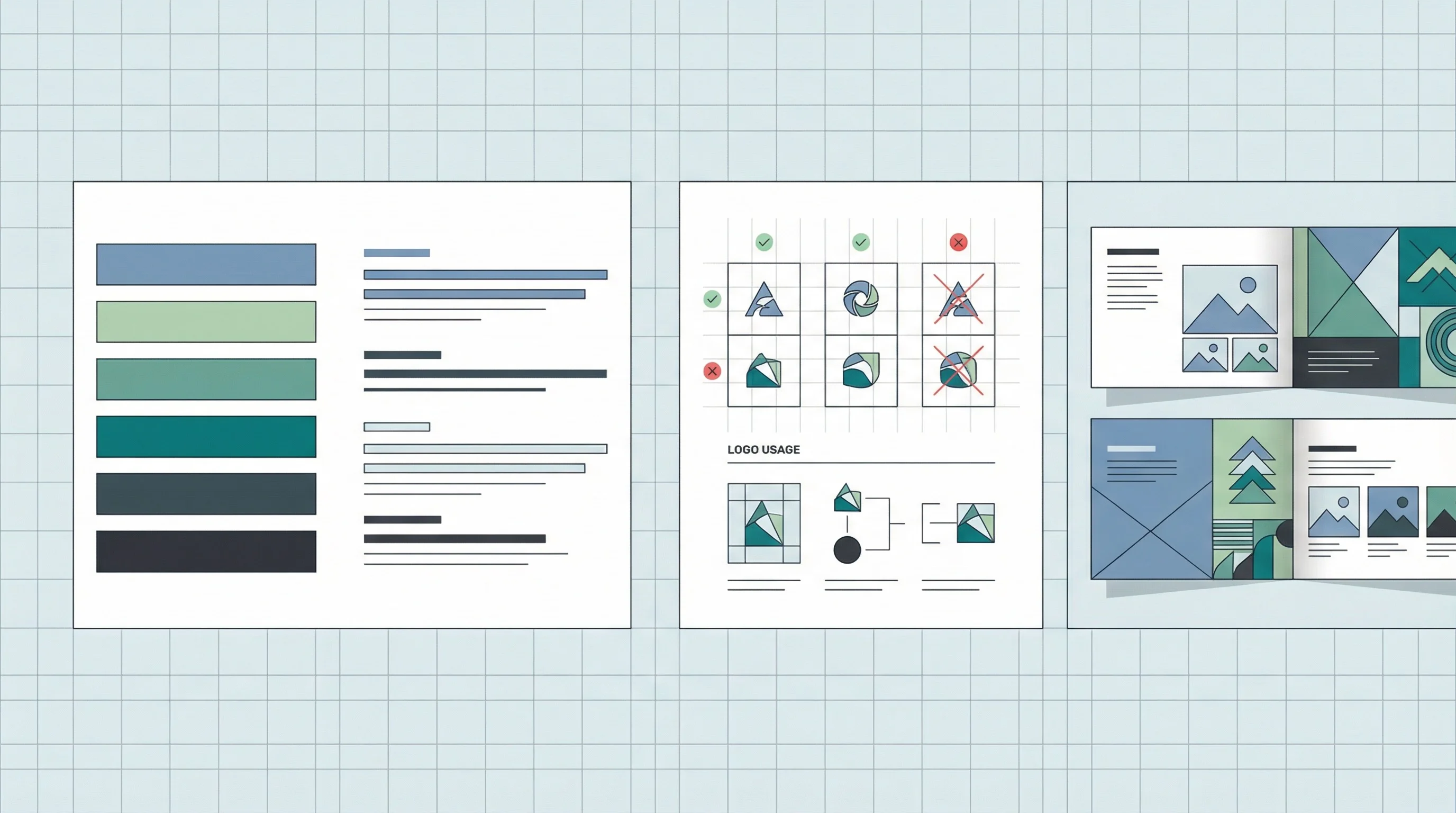
DIY branding makes sense for very early-stage businesses testing ideas with limited budgets. Hiring an agency makes sense when brand directly impacts revenue, you serve sophisticated markets, or you’re preparing for significant business milestones. The choice depends on your business stage, budget, and what’s at stake.
Here’s a question I get asked constantly:
“Should I do our branding myself or hire someone?”
The honest answer: it depends.
I’ve seen excellent DIY branding from thoughtful founders. I’ve seen £50,000 agency branding that was terrible. And vice versa.
The right answer isn’t about money alone. It’s about fit.
When DIY Branding Makes Sense
1. You’re testing a business idea
You’re not sure this will work yet. You need something functional while you validate the concept.
Spending £20,000 on branding for a business that might pivot in six months is wasteful. Start simple. Invest when you have proof.
DIY approach:
- Clean wordmark (your business name in a good font)
- 2-3 colours (pick a professional palette)
- Consistent use across limited touchpoints
- Plan to revisit when business is proven
2. Your budget is genuinely limited
Not “I’d prefer not to spend” but “I literally cannot spend.”
If the choice is between bad agency branding for £1,000 or thoughtful DIY branding for £100, DIY wins every time.
Reality check: If you can’t afford proper branding, can you afford to be in business? Sometimes bootstrapping requires scrappy approaches. Sometimes it reveals a fundamental problem.
3. You have design capability
Some founders have genuine design skills. If you’ve designed professionally before, you might create something better than a budget agency.
Warning: Most people overestimate their design abilities. “I have good taste” is not the same as “I can create effective design.”
Test: Have you designed anything professional before? Did it work? Did clients or users respond positively?
4. Your market is forgiving
Some industries care less about polish. Early-stage tech startups. Local service businesses. B2B where relationships matter more than presentations.
Other industries are unforgiving. Premium consumer products. Creative services (where your brand IS your product). Enterprise sales where perception affects credibility.
Assess honestly: How much does visual sophistication matter in YOUR market?
5. You’re selling to people like you
If your target customers are other bootstrapped founders, they’ll understand DIY aesthetics. They might even respect it.
If your target customers are corporate executives or design-conscious consumers, they’ll judge harshly.
Match the expectation: Your brand should match what your customers expect from a credible business in your space.
When to Hire an Agency
1. Brand directly affects revenue
In some businesses, brand is a nice-to-have. In others, it’s essential to winning business.
Brand-essential businesses:
- Creative agencies (you ARE your brand)
- Premium products (brand justifies price)
- Professional services (trust is everything)
- Consumer-facing businesses (first impression matters)
If potential customers make decisions based on perception before they’ve experienced your work, invest in perception.
2. You serve sophisticated markets
Enterprise clients, investors, upmarket consumers—they judge quickly. They’ve seen good and bad. They know the difference.
Sophisticated audiences expect sophisticated presentation. Meeting that expectation is table stakes.
3. You’re at a milestone
Preparing to raise investment? Entering new markets? Launching a major product? Hiring significantly?
Milestones often justify brand investment. The brand supports the opportunity. The opportunity justifies the investment.
4. Current brand is actively hurting you
You’re losing deals because of perception. You can’t charge what you’re worth. Wrong customers find you. Right customers don’t.
When brand damage is measurable, fixing it has clear ROI.
5. You can afford to do it properly
Half-measures waste money. A £5,000 budget for a project that really needs £15,000 produces mediocre results.
If you’re going to hire help, invest enough to do it right. Otherwise, wait until you can.
The Hybrid Approach
You don’t have to choose binary. Many businesses blend approaches:
Strategy from expert + execution yourself
Hire a strategist for a positioning workshop (£1,000-3,000). Get clarity on who you are and what you stand for. Then execute the visual identity yourself or with affordable designers.
This gets you strategic foundation without full agency cost.
DIY now + agency later
Start with DIY. Build the business. When revenue supports it, invest in proper branding. Many successful companies rebranded after proving their model.
Better to rebrand from success than to over-invest and struggle.
Agency for core + DIY for extensions
Hire professionals for logo and core visual identity. Handle ongoing applications (social posts, simple documents) yourself using templates they provide.
This balances quality and cost.
What DIY Branding Actually Costs
Your time:
- Research and learning: 10-30 hours
- Design exploration: 20-40 hours
- Refinement and application: 10-20 hours
- Total: 40-90 hours
At £50/hour opportunity cost, that’s £2,000-4,500 of your time.
Tools:
- Canva Pro: £100/year
- Adobe Creative Cloud: £600/year
- Font licenses: £50-200
- Stock imagery: £100-500
Other costs:
- Printing tests: £50-200
- Template purchases: £50-200
- Website builder: £100-300/year
Realistic DIY total: £500-2,000 plus 40-90 hours of founder time.
What Agency Branding Actually Costs
Freelancer/small studio:
- Logo only: £500-3,000
- Visual identity: £2,000-8,000
- Strategy + identity: £5,000-15,000
Boutique agency:
- Full brand package: £15,000-40,000
Mid-size agency:
- Full brand package: £40,000-100,000
Large/premium agency:
- Full brand package: £100,000-250,000+
You get what you pay for: Generally, higher investment means more senior talent, deeper research, more strategic thinking, and better execution.
But: Price doesn’t guarantee quality. Expensive agencies can still produce poor work. References and portfolios matter more than price.
How to Choose
Choose DIY if:
- Business model is still uncertain
- Budget is genuinely limited
- You have real design capability
- Your market is forgiving of scrappy
- You’re testing before investing
Choose agency if:
- Brand directly impacts revenue
- You serve sophisticated audiences
- Major milestone is approaching
- Current brand is measurably hurting you
- You can afford to do it properly
Choose hybrid if:
- You need strategic clarity but can execute
- Budget is moderate but not unlimited
- Some aspects need professionals, others don’t
- You want to grow into full investment
Quality Indicators for DIY
If you’re going DIY, aim for these standards:
Minimum bar:
- Logo works at small sizes and in black/white
- Colours are consistent everywhere
- Typography is limited to 2 fonts
- Everything looks intentional, not random
- You’d be comfortable showing it to your best potential client
Danger signs:
- You used 10 different fonts
- Colours clash or feel random
- Logo has excessive detail that disappears at small sizes
- Materials look inconsistent with each other
- You’re embarrassed to share it
FAQs
Is Canva good enough for real branding?
For execution tools, yes—many professionals use Canva. The tool doesn’t determine quality; skill and strategic thinking do. Canva with good decisions beats Illustrator with bad decisions.
Can I start DIY and hire an agency later?
Yes, and many successful businesses do exactly this. The key is knowing you’re creating something temporary. Don’t over-invest in DIY if you plan to replace it.
What’s the minimum I should spend on agency branding?
For a proper visual identity with strategic foundation, £5,000-10,000 minimum with a freelancer or small studio. Below that, you’re likely getting logo-only or very light process.
How do I evaluate agency portfolios?
Look for work similar to your industry and scale. Check if outcomes are mentioned (not just pretty pictures). Ask to speak with past clients. Pay attention to process descriptions, not just final work.
What if I hire an agency and hate the result?
Good agencies have revision processes built in. Problems usually stem from poor briefs or misaligned expectations. Clear communication and honest feedback prevent most disasters.
What to Do Next
- Assess your situation — which factors apply to you?
- Be honest about capability — can you really do this well?
- Calculate true costs — including your time for DIY
- Define minimum standard — what quality must you achieve?
- Decide and commit — half-hearted approaches fail either way
Need help deciding which approach fits your situation? Let’s discuss →
Related Articles: