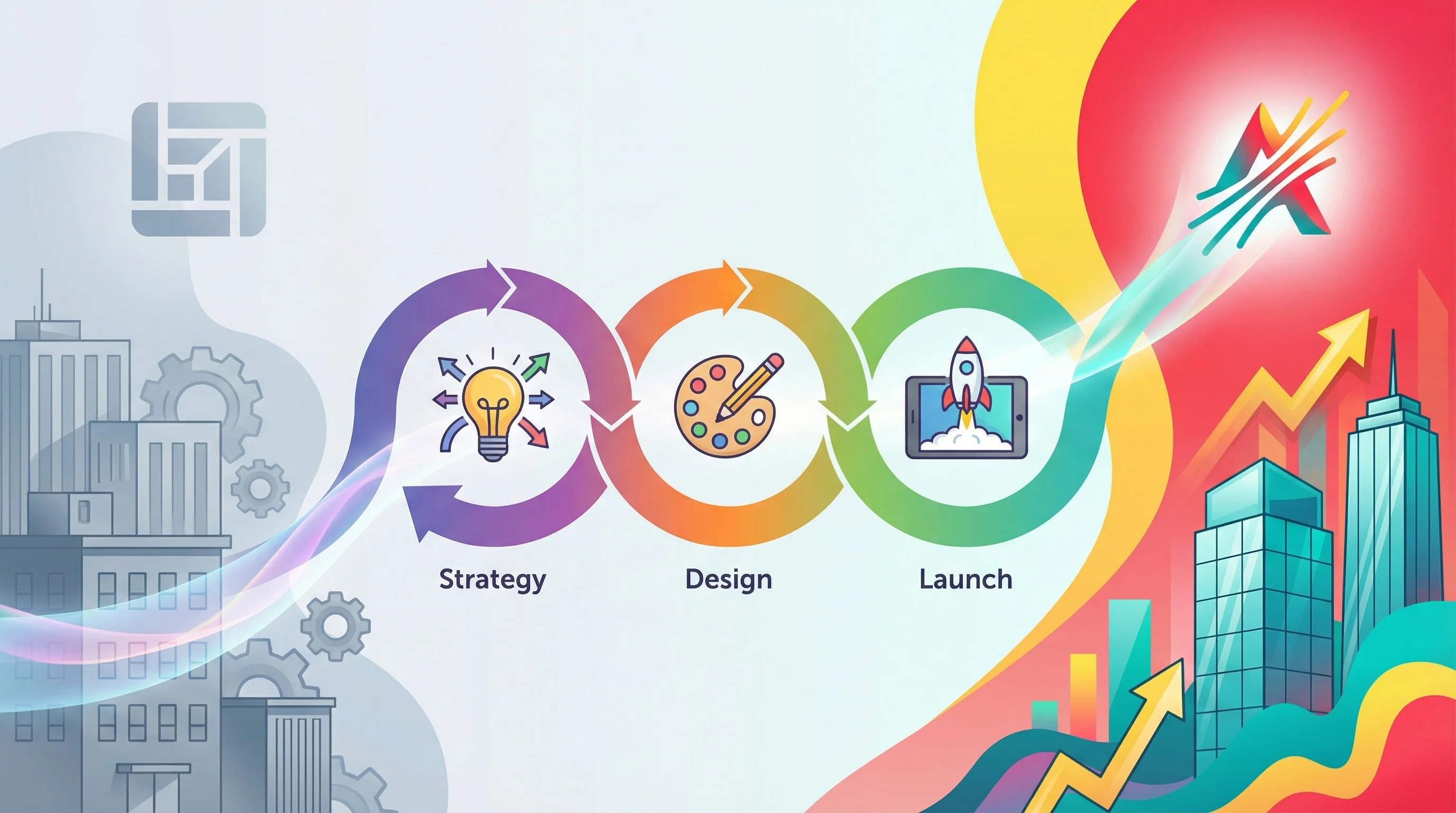
Note: This is an illustrative example based on typical client outcomes. Specific figures represent composite data from multiple engagements, not a single client.
A strategic rebrand can deliver measurable business results when the underlying problem is brand positioning, not product quality. This case study shows how a UK professional services firm increased revenue by 47% within 12 months of rebranding by repositioning from generalist to specialist.
Here’s a story about a rebrand that actually worked.
Not a logo refresh that made the founders happy. A strategic repositioning that transformed the business.
I’ll share what we did, why it worked, and what you can learn from it.
The Business Before
Company: A professional services firm (accounting and business advisory) Revenue: £380,000 annually Team: 5 people Location: Manchester
The problem:
They were good at what they did. Clients loved them. But growth had stalled.
New business came entirely from referrals. Marketing efforts generated noise but not clients. Website attracted tyre-kickers who wanted cheap services.
When they did win new clients, price negotiations were brutal. Every proposal became a discount conversation.
The diagnosis:
After our discovery process, the issue was clear: they were positioned as generalists in a market full of generalists.
“We help businesses with their accounts and advisory needs.”
So does everyone else.
Their actual strength was serving creative agencies and digital businesses. 70% of their best clients were in this sector. They understood the industry, spoke the language, knew the challenges.
But nothing in their brand reflected this specialism. They looked like every other accountancy firm.
The Rebrand Strategy
Phase 1: Positioning
We repositioned from “general accountancy firm” to “the financial partner for creative and digital agencies.”
This meant:
- Clear target audience (creative agencies, £500k-£5m)
- Specific value proposition (we understand agency economics)
- Differentiated messaging (not “we do accounts” but “we help agencies grow profitably”)
Phase 2: Messaging
Complete overhaul of how they communicated:
Old tagline: “Professional accounting services” New tagline: “Built for agencies”
Old positioning: “We provide a full range of accounting and advisory services” New positioning: “The only accountancy firm built specifically for creative agencies”
Old website copy: Generic benefits and services New website copy: Industry-specific challenges, agency-relevant case studies, terminology creative directors actually use
Phase 3: Visual Identity
The visual refresh supported the strategic shift:
Old: Traditional, corporate, navy blue, serif fonts New: Modern, creative-friendly, distinctive colour palette, cleaner typography
The visuals now signalled “we work with creative people” rather than “we’re a traditional accountant.”
Phase 4: Website
Complete rebuild focused on the target market:
- Homepage immediately identified target audience
- Case studies featured agency clients
- Blog content addressed agency-specific challenges
- Testimonials from recognisable creative businesses
- Pricing positioned at premium, not value
Phase 5: Go-to-Market
Launch strategy included:
- Email announcement to existing clients and network
- LinkedIn campaign targeting agency owners and finance leads
- Guest content in creative industry publications
- Speaking at creative industry events
The Results
12-Month Comparison:
| Metric | Before | After | Change |
|---|---|---|---|
| Annual revenue | £380,000 | £558,000 | +47% |
| Average client value | £4,200 | £6,800 | +62% |
| Proposals sent | 48 | 36 | -25% |
| Win rate | 31% | 58% | +87% |
| Inbound enquiries | 65 | 112 | +72% |
| Right-fit enquiries | 28% | 71% | +154% |
What the numbers show:
- Revenue grew 47% year-on-year
- Higher prices: average client value increased 62%
- Better targeting: fewer proposals needed because enquiries were more qualified
- Higher conversion: win rate nearly doubled
- More inbound: organic interest increased significantly
- Better fit: most enquiries now came from the target market
Why It Worked
1. They were actually good at the niche
The specialism wasn’t invented. It was revealed. They already had relevant experience, happy clients, and genuine expertise. The rebrand just made it visible.
2. The niche was big enough
“Creative agencies” is specific but not tiny. Thousands of UK agencies need accountancy services. Enough market to build a substantial business.
3. They committed fully
No half-measures. No “we’ll still take any work that comes in.” Full commitment to the positioning. They turned away clients who didn’t fit.
4. The team believed it
Everyone in the firm could articulate the positioning. They weren’t reading scripts; they believed in the specialism. Authenticity matters.
5. They gave it time
Results built over 12 months. Month 1 looked similar to before. By month 6, patterns changed. By month 12, transformation was clear. Patience paid off.
What They Invested
Brand strategy and visual identity: £18,000 Website design and build: £12,000 Launch marketing: £8,000 Total investment: £38,000
ROI calculation:
Revenue increase: £178,000 Investment: £38,000 Return: 4.7x in year one
The investment paid back within 3 months of launch through one significant new client win.
Key Lessons
Lesson 1: Specialism beats generalism
The market rewards focus. Being “the agency accountant” is more valuable than being “an accountant who works with agencies sometimes.”
Lesson 2: Positioning is strategy
The rebrand wasn’t really about visuals. It was about strategic focus. The visuals served the strategy.
Lesson 3: Turn away the wrong clients
Saying no to non-target clients felt risky. It was essential. Focus requires sacrifice.
Lesson 4: Give it time
Brand changes don’t deliver overnight results. Market perception shifts gradually. Plan for a 12-month horizon.
Lesson 5: Measure what matters
Revenue, profit, client value, win rates. Not social media followers or website visits. Business outcomes, not vanity metrics.
Would This Work for You?
This approach works when:
- You already serve a specific market well
- That market is large enough to sustain your growth
- You’re willing to focus and sacrifice breadth
- Your current brand undersells your capability
- You can commit for 12+ months
This approach doesn’t work when:
- You don’t have proven expertise in the niche
- The market is too small for your ambitions
- You need immediate results (next 90 days)
- Your business model is still uncertain
- You can’t or won’t turn away misfit clients
FAQs
Was this a full rebrand or refresh?
Full strategic rebrand. New positioning, new messaging, new visual identity, new website. The only thing that stayed was the company name.
How long did the rebrand process take?
16 weeks from project start to launch. Strategy took 6 weeks. Visual identity took 5 weeks. Website took 7 weeks (overlapping with visual identity development).
Did they lose any existing clients?
Two clients didn’t renew—both outside the target market. Neither was particularly profitable. The firm considered this a positive outcome, freeing capacity for better-fit clients.
What if they’d targeted a different niche?
The specialism emerged from existing client data. They chose agencies because they already had 70% of their best clients in that sector. Picking an aspirational niche without existing strength would have been riskier.
Would a visual refresh alone have worked?
Unlikely. The visual identity supported the strategic shift. Without repositioning, new visuals would have just been decoration—different but not more effective.
What to Do Next
- Analyse your client base — where do your best clients cluster?
- Evaluate the opportunity — is that segment large enough?
- Assess your positioning — does your brand reflect your actual strength?
- Quantify the gap — what’s the cost of your current positioning?
- Consider the commitment — can you focus for 12+ months?
Want to explore whether strategic repositioning could transform your business? Let’s talk →
Related Articles: