Every small business asks the same question:
Should we invest in SEO or PPC?
The honest answer: Both. But if you have to choose, it depends on your situation.
Here’s the data, the trade-offs, and a framework for deciding where to put your money.
The Numbers: SEO vs PPC ROI
Let’s start with what the data actually shows:
| Metric | SEO | PPC |
|---|---|---|
| Average ROI | 300–1,300% (long-term, varies by industry) | 100–200% (immediate) |
| Typical UK B2B ROI | ~702% | ~155% |
| Time to results | 6–12 months | Days to weeks |
| Cost trajectory | High upfront, decreasing over time | Consistent or increasing |
| Traffic sustainability | Traffic continues without ongoing spend | Traffic stops when spend stops |
The headline: SEO delivers higher returns, but takes longer. PPC delivers lower but more immediate returns.
UK Market Context (2026)
The landscape has specific characteristics:
Organic search captures the majority of clicks. Most people skip the paid ads at the top.
UK average CPC ranges from £0.95-£3.65 and rising. Competitive sectors (B2B SaaS, professional services, finance) see £5–£7+ per click.
Many UK small businesses don’t invest in SEO. That’s opportunity if you do.
B2B decision-makers often trust organic results more than ads. Perception matters.
When to Prioritise SEO
SEO is the right choice when:
You Have Time to Wait
SEO is a 6–12 month investment. If you need leads this month, SEO won’t help. If you can wait for compound returns, SEO builds an asset that keeps delivering.
Your Market Searches for Solutions
Check Google: Do people search for what you offer? If search volume exists, SEO can capture it. If your market doesn’t search, SEO won’t work.
How to check: Use Google Keyword Planner, SEMrush, or Ahrefs to see search volume for your services.
Competitors Aren’t Dominating Search
Some markets have entrenched competitors with years of SEO investment. Competing from zero is possible but expensive and slow.
Other markets have weak competition — businesses ranking with mediocre content and poor SEO. That’s opportunity.
How to check: Search your target keywords. If top results are big brands with massive sites, competition is tough. If top results are thin content from small businesses, you can compete.
Your Customer Lifetime Value Is High
SEO investment pays back over months and years. If your average customer is worth £5,000+, the long payback period makes sense. If your average sale is £50, you need faster returns.
You Want to Build an Asset
Paid traffic is rented. When you stop paying, traffic stops.
Organic traffic is owned. A well-ranked page keeps delivering traffic for years with minimal ongoing cost.
If you’re building for the long term, SEO creates an asset.
When to Prioritise PPC
PPC is the right choice when:
You Need Leads Now
PPC delivers traffic within days of campaign launch. If you have a sales team waiting, a product launch happening, or immediate revenue pressure — PPC is faster.
You’re Testing Messages or Markets
Before committing to SEO (which takes months), PPC lets you test:
- Which keywords convert
- Which messages resonate
- Which landing pages work
Test with PPC. Scale with SEO.
Competition Is Fierce
In highly competitive markets, reaching page 1 organically might take 18–24 months. PPC lets you appear at the top immediately — if you can afford the clicks.
Your Business Is Seasonal
If you only sell during certain periods (events, holidays, specific seasons), SEO’s slow build doesn’t match your timeline. PPC lets you scale spend during peak periods and pause during quiet ones.
You Have Budget But Not Time
SEO requires consistent content creation over many months. If you have marketing budget but can’t produce content regularly, PPC is simpler to execute.
The Real Answer: Do Both
For most small businesses, the optimal strategy combines both:
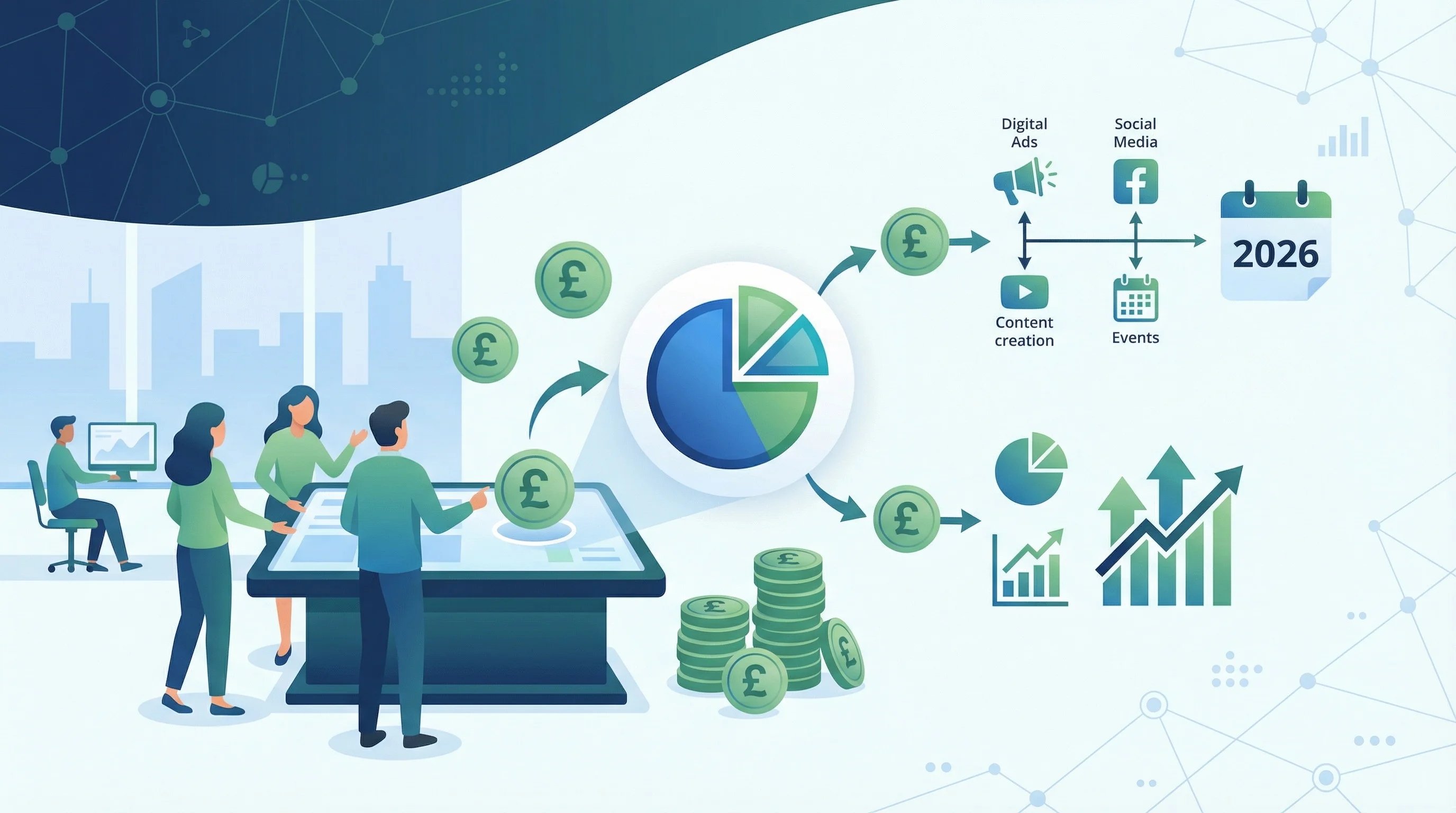
The 60:40 Framework
| Channel | % of Budget | Purpose |
|---|---|---|
| SEO | 60% | Build long-term organic traffic |
| PPC | 40% | Generate immediate leads, test and learn |
This balances immediate needs with long-term asset building.
The Phased Approach
Months 1–3: Heavy PPC (70%), light SEO (30%)
- PPC generates immediate leads
- SEO begins foundation work (technical, content planning)
Months 4–6: Balanced (50/50)
- PPC continues
- SEO content production ramps up
Months 7–12: Shift to SEO (30% PPC, 70% SEO)
- Organic traffic begins delivering
- PPC focuses on high-intent, high-conversion keywords only
Months 12+: Maintain balance based on performance
- SEO delivering consistent traffic
- PPC for tactical opportunities
What This Looks Like in Practice
£3,000/month budget:
| Month | SEO | PPC | Total |
|---|---|---|---|
| 1–3 | £900 | £2,100 | £3,000 |
| 4–6 | £1,500 | £1,500 | £3,000 |
| 7–12 | £2,100 | £900 | £3,000 |
SEO spend goes toward:
- Technical SEO fixes
- Content creation
- Link building
- Ongoing optimisation
PPC spend goes toward:
- Ad spend (typically 70–80% of PPC budget)
- Management (20–30% of PPC budget, or in-house time)
Decision Framework
Choose SEO-Heavy When:
- ✓ You can wait 6–12 months for significant results
- ✓ Your customer lifetime value is £1,000+
- ✓ Competition isn’t insurmountable
- ✓ You can produce content consistently
- ✓ You want to build long-term traffic assets
Choose PPC-Heavy When:
- ✓ You need leads in the next 30–90 days
- ✓ You’re testing a new market or offer
- ✓ Competition makes organic ranking very difficult
- ✓ Your business is seasonal or time-sensitive
- ✓ You have budget but limited content capacity
Do Both Equally When:
- You have immediate needs AND long-term goals
- You want to test with PPC, scale with SEO
- You’re in a moderately competitive market
- You have resources for both
The Costs Compared
SEO Investment
| Component | Monthly Cost |
|---|---|
| SEO agency/consultant | £750–£3,000 |
| Content creation | £500–£2,000 |
| Tools | £100–£300 |
| Total | £1,350–£5,300 |
ROI timeline: Break-even at 6–12 months. Positive ROI accelerates after.
PPC Investment
| Component | Monthly Cost |
|---|---|
| Ad spend | £1,000–£10,000+ |
| Management (agency or time) | £300–£1,500 |
| Landing page optimisation | £0–£500 |
| Total | £1,300–£12,000+ |
ROI timeline: Should be positive within 1–3 months if well-managed.
Common Mistakes
SEO Mistakes
Expecting fast results. SEO takes time. Patience is required.
Stopping after 6 months. SEO compounds. The benefits accelerate in year 2+. Stopping early means losing the investment.
Ignoring technical SEO. Great content on a broken site doesn’t rank.
Chasing vanity keywords. High-volume keywords aren’t always high-value. Target terms that convert.
PPC Mistakes
No conversion tracking. Running ads without knowing what converts is burning money.
Targeting too broadly. Broad keywords cost more and convert less. Focus on specific, high-intent terms.
Ignoring landing pages. Great ads sending traffic to a poor page waste clicks.
Not setting budgets carefully. It’s easy to overspend on PPC. Set daily caps. Monitor closely.
Combined Mistakes
Treating them as either/or. They complement each other. Use PPC data to inform SEO priorities. Use SEO rankings to reduce PPC spend on those terms.
No measurement. If you can’t compare ROI across channels, you can’t make good decisions.
How to Measure Success
SEO Metrics
| Metric | What to Track |
|---|---|
| Organic traffic | Month-over-month growth |
| Keyword rankings | Position changes for target terms |
| Organic leads/conversions | Traffic that turns into business |
| Domain authority | Long-term trend |
PPC Metrics
| Metric | What to Track |
|---|---|
| Cost per click (CPC) | Is it increasing or decreasing? |
| Click-through rate (CTR) | Ad relevance |
| Conversion rate | Landing page effectiveness |
| Cost per conversion | Ultimate efficiency |
| Return on ad spend (ROAS) | Revenue vs. spend |
Combined Metrics
| Metric | What to Track |
|---|---|
| Total cost per lead | Across both channels |
| Channel mix efficiency | Which delivers better ROI? |
| Brand search increase | Does PPC lift organic brand searches? |
The Bottom Line
If you can only afford one: Start with SEO if you can wait 6 months. Start with PPC if you need leads now.
If you can afford both: Do both. Use PPC for immediate leads and testing. Use SEO to build long-term traffic.
The real question isn’t SEO vs. PPC. It’s: What’s the right balance for your business, right now?
Get that balance right, and both channels work harder.
FAQ
How long before SEO delivers results?
Initial improvements: 3–6 months. Significant traffic: 6–12 months. Full potential: 12–24 months. Results compound over time.
What’s a good cost per click in the UK?
Average is £3.65. B2B services: £4–£8. E-commerce: £0.50–£2. Finance/insurance: £5–£15. Judge against your conversion value, not the average.
Can I do SEO myself?
Basic SEO, yes — with learning. Technical SEO and serious link building usually need expertise. Content you can often do yourself; strategy benefits from experience.
Should I run PPC if my website isn’t good?
No. Paid traffic to a bad website is wasted money. Fix the site first, or you’re paying for visitors who won’t convert.
At what budget does SEO make sense?
Below £500/month, SEO progress will be slow. £1,000–£2,000/month is minimum for meaningful progress. £3,000+/month for competitive markets.
Related: Digital Marketing for Small Business: The No-BS UK Guide | How Much Should Small Businesses Spend on Marketing in 2026?